Learning materials at Serbo-Croatian learning land

Learn Croatian & Serbian Languages

Welcome to Croatian & Serbian Learning Land!

What can you find here?

Listening practice

Listen to a short story, see the transcription and translation, and check the grammar and vocabulary analysis. For only listening experience, there are audio novels.

Grammar Practice

Practice the Croatian language basics, as well as Serbian, or go deeper with the cases, tenses, and other important grammar things. Find many topics adjusted to your level.

Video lessons

Learn all about a particular case, order in the sentence, tenses, and more.

Choose Your Level

Choose your Subscription

Some of our content is available for you to learn Serbian & Croatian FOR FREE, so you can explore the platform and start learning the Croatian language or the Serbian language right away.

For more engaged students who want deeper insights, additional resources, and a more complete Croatian and Serbian language learning experience, there is a range of flexible subscription options. Choose the plan that fits you best โ€” with both monthly and yearly subscriptions available to support your learning goals.

Audio Story

8,65โ‚ฌ

per month

Perfect for listening fans.

Get FULL ACCESS

All – Audio, Video, Exercises

20,81โ‚ฌ

per month

Ideal for real learning enthusiasts.

Audio story + Exercises

13,33โ‚ฌ

per month

Designed for listening and grammar practice.

Common questions about the Croatian & Serbian languages

Are there differences between Croatian, Serbian, and Bosnian?

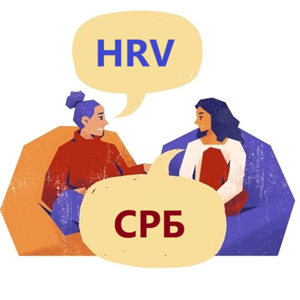
Foreigners usually know Croatian and Serbian as one language: Serbo-Croatian. This term, however, doesn’t exist formally anymore. That was politic term related to the language spoken in Yugoslavia (Jugoslavija). Still, it’s in use only in the context of learning those languages as a foreigner language. The fact is, they are so similar that foreigners sometimes don’t notice any difference.

However, there are some differences that you can see in more detail in this blog article. Here we’ll mention just the main ones: in Croatia, it’s used Latin script, while in Serbia, there are both Cyrillic and Latin in use. There are some differences in vocabulary: some words are completely different, while most of them are different only for ije/je (Croatia’s language and Bosnia’s language) and e (Serbian language).

Is BCMS one language?

Still, Croats and Serbians, as well as people living in Bosnia and Montenegro, understand each other with no need for translation. So, I usually compare these languages with British, American and Australian English. You can check if you can hear the difference by listening to any of the audio stories. Each one includes both the Croatian and Serbian versions.

However, there is only one analysis per story for both versions since, as I said, the languages mainly have the same grammar structure, sentence order and other elements. If there are some differences, I note them and explain.

How hard is learning Serbo-Croatian?

There is no rule what people will find learning the Croatian language and the Serbian language easy and what people will say that is is hard. Serbian and Croatian are Slavic languages, which are known as more complicated languages than world languages such as English, Spanish, Italian, French, German… That’s because the language logic is different. Slavic languages include grammatical cases, and perfective and imperfective verbs.

Those topics are the hardest to learn for students, but not for all of them, especially not for the students from Slavic countries such as Poland, the Czech Republic, Slovakia, Ukraine, Russia, and others, who understand the language rules better than non-Slavic speakers. But Slavs still need to learn Serbo-Croatian grammatical case suffixes because they are not the same as in their languages.

Also, in many cases, there are some words that exist in their languages, but they have a different meaning.

However, this is not a truth that only Slavs will speak Croatian/Serbian fluently, and people of other nations will never be able to. Definitely not true because I had many students, and still I do have classes with some of them who are from the West, started from zero, and today when they talk, they naturally use all the cases, with little mistakes here and there.

What are Croatia and Serbia known for?

BOOK ONLINE CROATIAN LESSONS

If you have any questions or if you’d like to book the lessons with me, please fill out the contact form, and I’ll contact you as soon as possible. You’ll get more information on the price, my availability, and other details.

Contact Us
First
Last

What Students Say

I started classes with Ivana because my wife is Croatian and I wanted a more meaningful relationship with her family. The way she used English and Croatian text simultaneously, spoke very slowly and clearly, and explained grammatical constructions was an obvious sign to me that she was not going to be a robotic "textbook" teacher. 

Phil H., USA

My family is from Croatia, I live there now and need to be able to communicate. Classes with Ivana have helped me understand a complex language, become more confident in myself with reading, writing and speaking. Ivana really pays attention to the way I learn and tailors the classes to suit. She makes our lessons interactive and expresses a lot of patience and kindness in every single lesson which I really appreciate.

Kristina

Kristina J., Australia

I was trying to learn the Croatian language on my own, but honestly, I was stuck. Since I started my lessons with Ivana, I've made so much progress! Best decision ever! Very engaging lessons with full explanation of grammar rules, and Ivana is great at encouraging honest conversation, which gives me confidence in speaking.

Mira

Mira L., Slovakia/UK