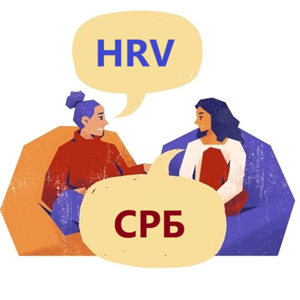
BEGINNER exercises Of Croatian & Serbian language
A1
A GOOD START IS HALF DONE
To know how to introduce yourself is half the job done.
Practice the basic phrases when introducing someone and having the first small talk.
HOW TO DESCRIBE THINGS CORRECTLY?
Gather all your knowledge about adjectives in Croatian and Serbian and just practice. All these weird suffixes will take their place in your head.
Make sure you know how to handle adjectives, like velik, mali, lijep/lep and similar; as well as possessive pronouns such as moj, tvoj, njegov etc.
YOUR FIRST CASES
Croatian, Serbian, Bosnian and Montenegrin languages have 7 cases. They are the same in all these languages – the same suffixes, the same rules.
Indeed, it’s challenging to remember all those suffixes but if you learn and practice step by step, it’s more than possible.
I recommend beginning with the most used cases. The first one is AKUZATIV and then LOKATIV.
YOUR FIRST TENSE
In learning any language, the best is to begin with the present tense when it comes to tenses.
BCMS languages have only one present tense. You can use it for describing your routine, current statements (what are you doing right now) and even promises.
LET’S CONTINUE WITH THE CASES
PRACTICE MAKING QUESTIONS
a2
WHOSE IS IT?
Practice on how to make the adjectives from the names (like John’s, Mary’s…) or make construction with 3 words (like my sister’s friend) by using genitiv case.
“IT IS BETTER THAN..”. – PRACTICE TO COMPARE THINGS AND PEOPLE!
LET’S CONTINUE WITH THE TENSES
In the beginner course, students learn the present tense first.
Croatian and Serbian use only 3 tenses activly.
After practicing the present tense, it’s time to improve other tenses – the past tense called “perfekt” and future tense (futur).
DATES AND YEARS
You learnt that it’s not all about the numbers when expressing dates. But sometimes it’s hard to remember it.
That’s why you need to practice. Repeating makes perfect.
MAKE THE SENTENCES
After you’ve practiced the most important cases and all the tenses, it’s time to learn structuring the sentences. These exercises could help!
INTERMEDIATE exercises Of Croatian & Serbian language
B1
DATIV & VERBS THAT COME WITH IT
Many people say “dativ” is the hardest case but it shouldn’t be if you remember the rule: when expressing any kind of giving – literally or figuratively – the recipient is in DATIV.
However, there are some verbs that require dativ but not the recipient in dativ. With the verbs “to like” (sviđati se), “to miss” (nedostajati), “to bother” (smetati), the real subject is in dativ, and the direct object in the basic form – opposite from the usual sentence rule (subject in the basic form and the object in akuzativ form).
VERBS – PERFECTIVE & IMPERFECTIVE; OTHER TENSES
COLLECTIVE NOUNS – VRATA, DJECA/DECA, BRAĆA
B2
COMBINE ALL THE CASES AND TENSES
MU, GA, JU, JOJ… PERSONAL PRONOUNS IN DIFFERENT CASES
PRACTICE USING ADJECTIVES AND NOUNS IN DIFFERENT CASES
You know the classic scenario:
how to say: “I live in a big house” – asks your teacher.
You remember using lokativ and “kuća” (house) is a feminine noun, so you say proudly:
“Živim u veliki kući.”
But…
Your teacher doesn’t say “Tako je!”
Why? What’s wrong now?
“Velika” is an adjective, so it’s declined differently from nouns – “Živim u velikoj kući.”
Ehhh…
But no worries – with regular practice, you will start applying the right suffixes automatically.
Let’s practice!