-
Adjectives and possessive pronouns
Practice to change the adjectives (big, small, tall, short…), and possessive pronouns (my, your, his, her…) depending on the noun gender.
If you need a guide on how to do it, check this video lesson.
-
First conversation – exercises
Practice the basic phrases, conjugation of the verb “to be” and other simple things that are useful for your first communication in Croatian or Serbian.
This quiz is for logged in users only.
-
Grammatical Tenses Exercises – Present, Past, Future
Practice the tenses in Croatian and Serbian language. Here are the exercises to practice present tense, past tense and future tense separately or all together – mix!
Choose the right exercise for you and leverage your Serbo-Croatian!
In the continuation, there are exercises to practice all 3 tenses mixed.
Zadatak 1 – Exercise 1
Zadatak 2 – Exercise 2
-
Grammatical Cases – Exercises
Practice the grammatical cases in the Croatian and Serbian language with the following exercises.
Here you can practice combining them all together. If you want to practice the cases separately, find the exercises for each of them.
Note that some examples include both Croatian and Serbian versions of a word. The first one is always Croatian (CRO) and the second one is Serbian (SRB).
Example: djevojka / devojka, mlijeko/mleko, etc.
In some exercises, you’ll get the explanation for the cases after submitting the quiz.
Sretno! / Srećno! (Good luck!)
Zadatak 1 – Exercise 1
Zadatak 2 – Exercise 2
-
BEGINNER
A1 LEVEL
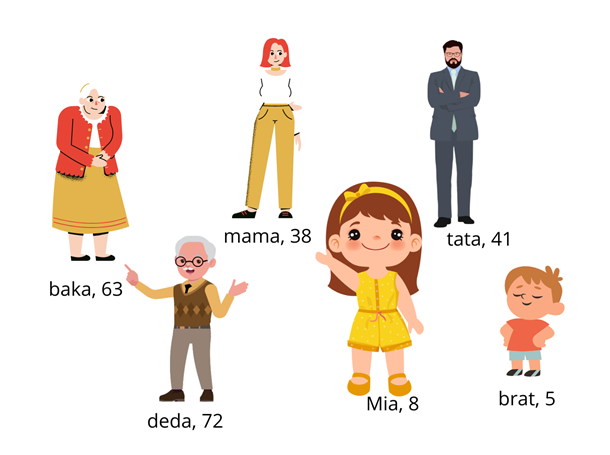
Learn: name, surname, age, family members, verbs „to be“ and „to have“

Learn: verb „to live“, question word „gdje/gde“ and the grammatical case it comes with, numbers + nouns
PREMIUM: Check more stories
Learn: question words „where from“ and „where to“ and grammatical cases that come with
Learn: conjugation of the verb „to go“, how to express transportation
Koliko je sati? /U koliko sati imaš sastanak?
Learn: expressing time, days of the week, the word „every“
Coming soon…
Bezobrazan šef ima ljubaznu ženu
Kod kuće i vani
A2 LEVEL
LEARN: akuzativ – the most important grammatical case, possessive pronouns (my, your, his, her…); possessive adjectives
Što se dogodilo jučer? / Šta se desilo juče?
LEARN: Past tense
PREMIUM: Check more stories
LEARN: Narrating in the past
LEARN: Future tense; the expression „ne da mi se“ (don’t feel like doing anything)
Što je radila tvoja baka prije, a čime se sad bavi?
LEARN: Past and present tenses mixed
Coming soon…
Čime se baviš i čime si se bavio?
-
Gdje živiš? / Gde živiš? – Where do you live?
Learn: verb „to live“, question word „gdje/gde“ and the grammatical case it comes with, numbers + nouns
CROATIAN VERSION
Transcription – CRO
Živim u gradu, a moji roditelji – mama i tata – žive na selu. Imam jednog brata i jednu sestru. Živimo svi zajedno. Prijatelji me često pitaju: „S kim živiš?“ Ja kažem: „Živim s bratom i sestrom.“
„Zašto ne živiš s mamom i tatom – s roditeljima?“ – pitaju me.
Jer moja braća i ja idemo na fakultet u Zagrebu pa živimo u stanu, a naši roditelji žive u kući na selu.
Ovdje imamo prijatelje i susjede. Moja sestra ima dvije (2) dobre prijateljice, moj brat ima dva (2) dobra prijatelja, a ja imam samo jednu (1) prijateljicu, ali volim se družiti sa susjedom Marinom.
Moja susjeda Marina je 2 (dvije) godine starija od mene i već ima muža i jedno (1) dijete, a ja nemam ni muža ni djecu. Njezin muž Filip je naš dobar susjed. Često se družimo svi zajedno.
VOCABULARY
- živjeti (živim) – to live (I live)
- grad – city/town
- selo – village/coutryside
- svi – everybody
- zajedno – together
- često – often
- pitati – to ask
- s – with
- zašto – why
- jer – because
- fakultet – university
- stan – apartment, flat
- kuća – house
- ovdje – here
- muž – husband
- dijete – child
- djeca – children
- družiti se – to hang out
SERBIAN VERSION
Transcription – SRB
Cyrillic
Живим у граду, а моји родитељи – мама и тата – живе на селу. Имам једног брата и једну сестру. Сви живимо заједно. Другари ме често питају: “С ким живиш?” Ја кажем: „Живим са братом и сестром“.
“Зашто не живиш са мамом и татом – са родитељима?” питају ме.
Јер моја браћа и ја идемо на факултет у Београду, па живимо у стану, а родитељи у кући на селу.
Овде имамо другаре и комшије. Моја сестра има две (2) добре другарице, брат два (2) добра друга, а ја само једну (1) другарицу, али волим да се дружим са комшиницом Марином. Моја комшиница Марина је 2 (две) године старија од мене и већ има мужа и једно дете, а ја немам ни мужа ни децу. Њен муж Филип је наш добар комшија. Често се дружимо сви заједно.
Latin
Živim u gradu, a moji roditelji – mama i tata – žive na selu. Imam jednog brata i jednu sestru. Svi živimo zajedno. Drugari me često pitaju: “S kim živiš?” Ja kažem: „Živim sa bratom i sestrom“.
“Zašto ne živiš sa mamom i tatom – sa roditeljima?” pitaju me.
Jer moja braća i ja idemo na fakultet u Beogradu, pa živimo u stanu, a roditelji u kući na selu.
Ovde imamo drugare i komšije. Moja sestra ima dve (2) dobre drugarice, brat dva (2) dobra druga, a ja samo jednu (1) drugaricu, ali volim da se družim sa komšinicom Marinom. Moja komšinica Marina je 2 (dve) godine starija od mene i već ima muža i jedno dete, a ja nemam ni muža ni decu. Njen muž Filip je naš dobar komšija. Često se družimo svi zajedno.
VOCABULARY
- живети / živeti (živim) – to live (I live)
- град / grad – city/town
- село / selo – village/coutryside
- сви / svi – everybody
- заједно / zajedno – together
- често / često – often
- питати / pitati – to ask
- са / sa – with
- зашто / zašto – why
- јер / jer – because
- факултет / fakultet – university
- стан / stan – apartment, flat
- кућа / kuća – house
- овде / ovde – here
- муж / muž – husband
- дете / dete – child
- деца / deca – children
- дружити се / družiti se – to hang out
Translation
Živim u gradu, a moji roditelji – mama i tata – žive na selu.
I live in the city, and my parents – mom and dad – live in the village.
Imam jednog brata i jednu sestru.
I have one brother and one sister.
Živimo svi zajedno.
We all live together.
Prijatelji/drugari me često pitaju: „S kim živiš?“
My friends often ask me: “Who do you live with?”
Ja kažem: „Živim s bratom i sestrom.“
I say: “I live with my brother and sister.”
„Zašto ne živiš s mamom i tatom – s roditeljima?“ – pitaju me.
“Why don’t you live with mom and dad – with your parents?” they ask me.
Jer moja braća i ja idemo na fakultet u Zagrebu/u Beogradu pa živimo u stanu, a naši roditelji žive u kući na selu.
Because my brothers and I go to university in Zagreb/Beograd, so we live in an apartment, and our parents live in a house in the countryside.
Ovdje/ovde imamo prijatelje/drugare i susjede/komšije.
We have friends and neighbors here.
Moja sestra ima dvije dobre prijateljice, moj brat ima dva dobra prijatelja, a ja imam samo jednu prijateljicu, ali volim se družiti sa susjedom Marinom.
My sister has two good friends (female), my brother has two good friends (male), and I only have one friend, but I like hanging out with my neighbor Marina.
Moja susjeda/komšinica Marina je 2 godine starija od mene i već ima muža i jedno dijete/dete, a ja nemam ni muža ni djecu.
My neighbor Marina is 2 years older than me and already has a husband and one child, while I have neither husband nor children.
Njezin muž Filip je naš dobar susjed/komšija. Često se družimo svi zajedno.
Her husband Filip is our good neighbor. We often hang out together.
Analysis
VERBS
In the previous story, we introduced the verbs -ati group (imati), -iti (raditi), and -ći (ići- idem -irregular). Here we’re introducing one more verb type.
Živjeti/živeti is -(j)eti group. Let’s see how to conjugate all the verbs whose infinitives end with -(j)eti:
CRO: živ – jeti → remove -jeti
SRB: živ – eti → remove -eti
Ja živ + im → živim Ti živiš On, ona živi Mi živimo Vi živite Oni, one žive As you can see, the suffixes are almost the same as in all verbs (m, š, 0, mo, te, e).
ONE MORE IRREGULAR VERB – KAZATI (TO SAY, TO TELL)
It’s an interesting verb because it is used mostly in the present tense while in the past and future tenses, we use its synonym – reći [about past and future tenses later].
Ja kažem Ti kažeš On, ona kaže Mi kažemo Vi kažete Oni, one kažu LOKATIV – introduce one more grammatical case
In the previous story, we introduced the most common case – akuzativ. To review, akuzativ is used for direct object in the sentences, for the noun after the verb. Examples:
Imam sestru. (I have a sister)
Volim brata. (I love my brother)
Tražim mobitel. (I’m searching for a mobile phone)
Now it’s time to see one more function of AKUZATIV – it is used when talking about direction.
Jer moja braća i ja idemo na fakultet u Beograd, pa živimo u stanu, a roditelji u kući na selu.
Idemo na fakultet → We go where? – It’s about direction so we put the destination (fakultet) in akuzativ form.
In this example, fakultet is masculine noun and inanimate so it doesn’t change, but when we use a feminine word, it changes. For example: Idem u školu.
LOKATIV
In the other hand, when you talk about position, location (and not direction), use LOKATIV.
As its name says, this grammatical case signifies location but not destination → use it to tell where you are and not where you are going.
Jer moja braća i ja idemo na fakultet u Beograd, pa živimo u stanu, a roditelji u kući na selu.
All the bolded nouns are in the the lokativ form. Here are their basic forms – NOMINATIV:
Stan – masculine noun → u stanu (in LOKATIV a masculine noun gets the suffix -u)
Kuća – feminine → u kući (feminine nouns get the suffix -i)
Selo – neutral → na selu (neutral nouns get -u, just like masculine)
When to use u (in) and when na (on)?
Both for direction (akuzativ) and location (lokativ) we use the same prepositions – u or na.
U is usually used for closed places:
house – kuća – u kući;
school – škola – u školi;
office – CRO ured – u uredu / SRB kancelarija – u kancelariji
Na is used for open places (beach: plaža – na plaži; square: trg – na trgu).
There are some exceptions: u + park; na + fakultet, na + posao
Also, all cities and villages get u and islands na (Idemo u Zagreb, u Beograd; Idemo na Siciliju, na Hvar…)
Numbers 1 and 2
As you can notice, numbers 1 and 2 have 3 forms – masculine, feminine and neutral. Other numbers have only one form.
Number 1
The basic form of the number 1 is:
Jedan brat, jedna sestra, jedno dijete/dete
In akuzativ, it sounds like:
Imam jednog brata i jednu sestru. Ona ima muža i jedno dijete/dete.
Number 2
Dva brata, dvije CRO/dve SRB sestre, dva djeteta/deteta
In akuzativ, the number 2 stays the same as its basic form:
Moja sestra ima dvije/dve dobre prijateljice/drugarice,a brat dva dobra prijatelja/druga.
As you can see, with the number 2, it begins plural so we need to apply the rule:
MASCULINE NOUNS
1 jedan brat
2 dva brata – genitiv form (one more grammatical case we’ll learn later)
3 tri brata
4 četiri brata
… and with all other numbers the masculine words get the suffix -a
The same is with neutral gender: jedno jaje, dva jaja, tri jaja… (jaje – egg)
FEMININE GENDER
1 – jedna sestra
2 (dvije), 3 (tri), 4 (četiri) sestre (plural)
5 pet sestara
6 šest sestara
… all more than 5 get genitiv form
But always consider the last digit. If there are 21 sisters, it may seem ridiculous but in the Serbo-Croatian world, it’s grammatically singular because the last digit is 1, so it will be – dvadeset jedna sestra. Remember the rule for “godina” from the previous story – the rule is the same for all the feminine nouns.
Let’s practice!